Things to Do in Bosnia and Herzegovina
Ottoman bridges, mountain air, and coffee thick enough to stand on
Top Things to Do in Bosnia and Herzegovina
Find activities and tours you'll actually want to do. Book through our partners -- no booking fees.


Plan Your Trip
Essential guides for timing and budgeting
Climate Guide
Best times to visit based on weather and events
View guide →Day Trips
The best excursions and nearby destinations worth the journey
Explore day trips →Where to Stay
Best neighbourhoods, hotel picks, and booking tips
Find hotels →Travel Insurance
What's required, what coverage matters, and how to get a quote
Read guide →What to Pack
Climate-specific gear, essentials, and what to leave at home
See packing list →Before you go, read our Bosnia and Herzegovina safety guide for neighbourhoods to know, emergency numbers and current official travel advice.
When Should You Visit Bosnia and Herzegovina?
Tap a month for weather, crowds, and highlights
View full year-round climate guide →Your Guide to Bosnia and Herzegovina
About Bosnia and Herzegovina
The first thing you notice in Bosnia and Herzegovina is how the air changes. Between Sarajevo's Baščaršija bazaar, where the smell of ćevapi grilling over charcoal mingles with the clatter of copperworkers hammering coffee sets, and Mostar's Stari Most, where the Neretva's green water runs so cold it bites even in July, the altitude keeps everything sharp.
In Sarajevo's Ferhadija Street, Ottoman stone gives way to Austro-Hungarian facades within three blocks. The same barista who pours traditional bosanska kafa for 1.50 KM ($0.85) at 7 AM will serve you Italian espresso for 3 KM ($1.70) by noon. Bosnia and Herzegovina's trains still run on tracks laid in Tito's Yugoslavia, slow, yes, but the journey from Sarajevo to Konjic follows the Neretva through canyons no highway reaches.
The catch: outside July and August, you'll need layers. Mornings in Jajce's medieval citadel start brisk even when Mostar bakes by afternoon. It's the in-between moments that make Bosnia and Herzegovina. The call to prayer echoes across Sarajevo's hills at sunset. Strangers insist you try their homemade rakija despite the language barrier.
You come for the history. You stay because nowhere else makes you feel this immediately, intensely present.
Travel Tips
Transportation: The train from Sarajevo to Mostar takes two hours of canyon views that buses can't match, and costs 11 KM ($6) second class. Download the Moovit app before you land. It's more reliable than Google Maps for Bosnia and Herzegovina's local buses. In Sarajevo, the #103 trolleybus from Baščaršija to the airport runs every 15 minutes for 1.60 KM ($0.90). That beats taxi flat rates of 30 KM ($17). Renting a car makes sense only if you're heading to Sutjeska National Park or crossing into Montenegro. Otherwise, Bosnia and Herzegovina's bus network covers everything for 2-20 KM ($1-j-11) per journey. Parking in old towns is a nightmare of narrow streets and hourly fees that add up fast.
Money: Bosnia and Herzegovina uses the convertible mark locked to the euro at 1.96 KM per euro. ATMs charge 3-5 KM ($1.70-2.80) per withdrawal, so pull larger amounts. Most places prefer cash anyway. Credit cards work in hotels and larger restaurants. The bakeries in Baščaršija and Mostar's bazaar stalls are strictly cash. Exchange offices give better rates than banks. Try Ferhadija Street in Sarajevo or the ones near Mostar's Musala square. Tipping isn't mandatory but rounding up 10% in restaurants is appreciated. Your server likely makes 800-1,200 KM ($450-680) monthly. The real money saver? Order 'domaća kafa' for 1.50 KM ($0.85) instead of espresso for 3 KM ($1.70). It tastes better anyway.
Cultural Respect: In Sarajevo's mosques, women need to cover hair and shoulders. Loaner scarves hang by every entrance. During Ramadan, avoid eating on Baščaršija's main streets between sunrise and sunset. Locals are fasting but won't mention it. The three-finger salute is offensive in Sarajevo and Mostar. Don't imitate it in photos. When invited for rakija, accept at least one tiny sip even if you don't drink. Refusing outright is considered rude. The war ended 30 years ago. Bringing up wartime experiences still cuts deep. Stick to topics like music or football. Bosnians will happily explain the difference between Sarajevo and Mostar ćevapi. In Mostar's Muslim quarter, shoes come off before entering homes. Watch for the pile of sandals by the door.
Food Safety: The ćevapi at Željo in Sarajevo's Baščaršija comes off grills hot enough to kill anything. Locals eat here twice daily without issues. Portions are 8 KM ($4.50) and filling. Drink tap water everywhere except Stolac. Bosnia and Herzegovina's mountain-fed supply tastes better than bottled 1.5L for 1 KM ($0.55). The biggest risk isn't bacteria but overeating. Burek portions at Buregdžinica Bosna are massive at 4 KM ($2.25). They're best consumed hot at 9 AM when they're fresh from the oven. Markets like Markale in Sarajevo sell unpasteurized cheese that's safe if it looks busy. Avoid stalls with flies. Ice cream from street carts is fine. The power outages that plagued the 90s are history. Vendors now have proper freezers.
When to Visit
May and September are your sweet spots. Temperatures hover between 18-25°C (64-77°F) in Sarajevo and 22-28°C (72-82°F) in Mostar. Hotel prices drop 40-50% lower than July-August peaks. June brings 12 hours of daylight good for hiking Sutjeska National Park. Expect 20-30% price jumps as Europeans start arriving. July-August hits 30°C (86°F) in the cities and 35°C (95°F) in Mostar's valley.
Hotel prices spike 60-80%. Every bridge in Mostar has crowds queuing for photos. The shoulder seasons solve this. October means 15°C (59°F) days, golden leaves in Jajce's waterfalls, and 35% cheaper accommodation. Mountain roads can see early snow. December-February is harsh at -5°C (23°F) in Sarajevo but memorable. You'll have Vrelo Bosne's frozen waterfalls to yourself.
Ski lift passes at Jahorina cost 25 KM ($14) versus 35 KM ($20) in January. April brings Orthodox Easter celebrations in Trebinje with lamb roasted over open fires for 15 KM ($8.50) per kilo. March sees Sarajevo's Film Festival crowds gone but cafes still serving outside with blankets. The real insider month for Bosnia and Herzegovina?
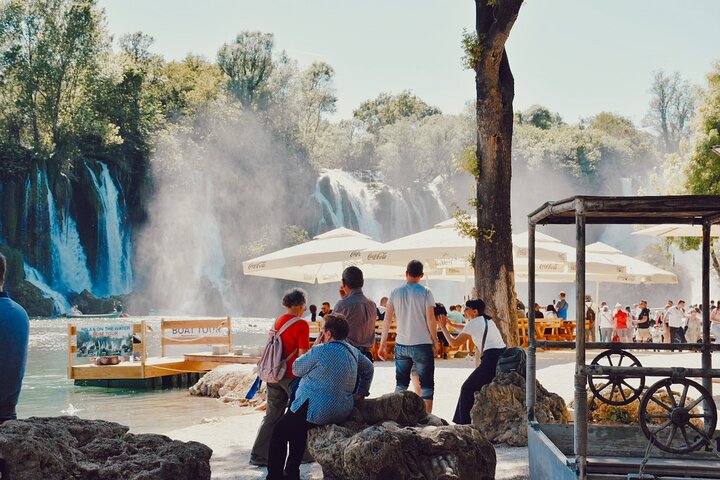
September. Mostar's bridge diving championships happen September 7-8. Hotel prices drop 45% from August. The water's still warm enough for swimming at Kravice waterfalls.
More Ways to Experience Bosnia and Herzegovina
Tours, day trips, and local experiences curated by on-the-ground operators.
Didn't see anything interesting yet?
Browse Viator's full catalog of tours, day trips, food experiences, and private guides in Bosnia and Herzegovina.
See All Bosnia and Herzegovina Tours on Viator